Quick View
Please Note: This Manufacturer Part Number is specific to an OEM specification. Customers MUST select the related specification from the right hand side. Selecting "Manufacturers Certification" will not lead to the correct paperwork being supplied as standard OEM certification is not available for this product.

GracoRoberts supplies epoxy laminating resins, curing agents, and complete epoxy laminating systems for aerospace composites manufacturing, fabrication, and repair. These materials are used to impregnate reinforcement fibers, bond composite layers, and form cured laminate structures in wet layup and other compatible composite manufacturing processes.
Our portfolio includes Huntsman EPOCAST® epoxy laminating systems and Resin Formulators epoxy resins and curing agents. Products are available in multiple kit sizes and packaging configurations.
For reinforcement materials used in composite layup, explore our composite fibers and fabrics and prepreg materials.






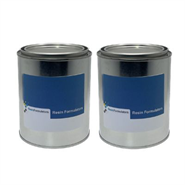


Two-component epoxy laminating systems combine a resin and compatible curing agent to form a thermoset composite matrix. These systems are used to impregnate reinforcement fabrics and create cured composite laminates. Product selection depends on processing viscosity, working time, cure schedule, and required mechanical properties.
Liquid epoxy resins serve as the matrix material in compatible composite laminating formulations. When combined with an appropriate curing agent, they form a crosslinked structure that binds reinforcement fibers and contributes to the laminate's mechanical and environmental performance.
Epoxy curing agents initiate the chemical crosslinking process that converts liquid epoxy resin into a solid thermoset material. Curing agent selection influences processing characteristics, cure requirements, and final material properties. Resin and curing agent compatibility, mix ratios, and curing conditions should be verified against the manufacturer's technical data sheets before use.
Epoxy laminating systems are used in aerospace composite fabrication where reinforcement fibers are combined with resin to produce lightweight, rigid laminate structures. Material selection depends on structural requirements, manufacturing methods, and applicable aerospace specifications.
Compatible epoxy laminating systems support composite repair processes involving reinforcement fabric layup and laminate restoration. Aerospace maintenance applications require careful consideration of approved materials, repair procedures, cure conditions, and documentation requirements.
Liquid epoxy resins support wet layup processes in which reinforcement fabrics are impregnated with resin before curing. Processing characteristics such as viscosity, pot life, and working time influence fabric wet-out, handling, and laminate consistency.
Epoxy resin systems are also used in industrial composite manufacturing where adhesion, mechanical performance, and dimensional stability are important. Resin selection should account for operating temperature, environmental exposure, reinforcement compatibility, and required cure conditions.
Selecting an epoxy laminating resin system requires evaluating both the manufacturing process and the performance requirements of the finished composite.
Key considerations include:
GracoRoberts offers epoxy laminating products in multiple packaging configurations to support varying material quantities and procurement needs.
Aerospace composite manufacturing requires careful material selection and documentation to support approved manufacturing and repair processes.
Documentation and sourcing considerations include:
Need help selecting an epoxy laminating resin or curing agent for your composite application? Schedule a free consultation with our Composites and Adhesives Subject Matter Expert about available materials and sourcing requirements.
Epoxy laminating resins are used to impregnate reinforcement materials such as fiberglass and carbon fiber during composite fabrication. When combined with compatible curing agents and processed according to manufacturer instructions, they form cured composite laminates used in aerospace, industrial, and other advanced manufacturing applications.
An epoxy resin is the base material that reacts with a compatible curing agent to form a cured thermoset polymer. A complete epoxy laminating system typically includes the resin and its specified curing agent, supplied together for use in composite layup and fabrication.
Curing agent selection depends on the epoxy resin formulation, required working time, cure schedule, and desired final material properties. Always confirm compatibility, mix ratios, and processing instructions using the manufacturer's technical data sheets.
Important factors include reinforcement compatibility, viscosity, pot life, cure temperature, mechanical and thermal properties, and applicable aerospace specifications. For qualified aerospace applications, the selected material must also meet the relevant program and documentation requirements.