Quick View
Please Note: This Manufacturer Part Number is specific to an OEM specification. Customers MUST select the related specification from the right hand side. Selecting "Manufacturers Certification" will not lead to the correct paperwork being supplied as standard OEM certification is not available for this product.

GracoRoberts supplies core and void filling materials for aerospace composite manufacturing, structural bonding, and repair applications. These materials are used to fill gaps and cavities, join honeycomb core sections, and provide localized support around edges, inserts, and transitions within composite sandwich structures.
Our portfolio includes composite resin fillers such as epoxy syntactic foams and structural void filling compounds, along with core splice adhesive films and expanding syntactic films from leading manufacturers including 3M, Huntsman, Henkel, and Resin Formulators. Available in cartridges, kits, sheets, and rolls, these materials support a range of composite fabrication and processing requirements.
For related materials used in composite manufacturing, explore our prepreg materials and composite process materials.


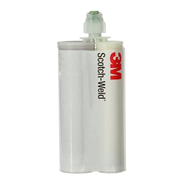

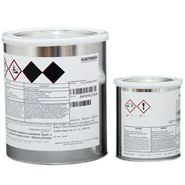




Epoxy syntactic materials incorporate lightweight fillers within a resin matrix to create compounds suited for filling cavities, supporting composite structures, and reinforcing localized areas. These materials are used in aerospace sandwich structures where controlled density, dimensional stability, and mechanical performance are important.
Structural void fillers are used to fill gaps, cavities, and irregular spaces in composite assemblies. Depending on the formulation, these materials can provide localized support and help distribute loads within bonded structures.
Select formulations are available with flame-retardant (FR) or fire, smoke, and toxicity (FST) performance characteristics, depending on the product and applicable specifications.
Core splice films are adhesive materials designed to join adjacent sections of composite core material, including honeycomb core structures. They support core-to-core bonding during sandwich panel fabrication and help maintain continuity between core sections.
Expanding syntactic films are designed to expand during specified cure conditions, filling designated cavities or gaps within composite structures. These materials can support localized reinforcement and controlled filling in applications where a preformed film is preferred over a paste.
Core splice adhesive films and compatible filling materials support honeycomb core bonding, edge closeouts, and transitions within composite sandwich structures. Material selection depends on core geometry, bond requirements, and processing conditions to support structural continuity and localized reinforcement.
Epoxy syntactic materials and structural void fillers are used to fill cavities, reinforce localized areas, and support interfaces between composite skins and core materials. These applications require consideration of material density, compressive properties, cure conditions, and compatibility with adjoining substrates.
Core and void filling materials can provide localized support around inserts, fittings, and load introduction points in composite assemblies. The selected material must be compatible with the surrounding core and laminate structure and meet the mechanical requirements of the application.
Compatible syntactic compounds and void fillers support approved composite repair processes involving damaged core regions, irregular cavities, and edge restoration. Material selection depends on repair geometry, processing requirements, and applicable aerospace specifications.
Selecting core and void filling materials requires evaluating the composite structure, application geometry, manufacturing process, and required performance of the cured material.
Key considerations include:
GracoRoberts offers core and void filling materials in multiple configurations, including cartridges, kits, sheets, and rolls, to support different manufacturing and procurement requirements.
Aerospace composite manufacturing requires careful material selection and documentation to support approved fabrication and repair processes. Our portfolio includes select products associated with aerospace specifications such as BMS 5-28, BMS 5-16, and applicable manufacturer or program-specific requirements. Documentation and specification availability vary by product configuration.
Documentation and sourcing considerations include:
Need help selecting core or void filling materials for your composite application? Schedule a free consultation with our Composites and Adhesives Subject Matter Expert to discuss material selection and sourcing requirements.
Core and void filling materials are used to fill cavities, bond core sections, and provide localized support within composite structures. Common applications include honeycomb sandwich panel fabrication, core splicing, edge filling, insert reinforcement, and approved composite repair processes.
Syntactic foam is a lightweight composite material typically made with hollow microspheres dispersed in a resin matrix. Structural void fillers include a broader range of composite resin fillers designed to fill gaps or cavities while providing specified mechanical support. Some epoxy syntactic formulations also function as structural void fillers.
Core splice adhesive films are placed between adjacent core sections to create bonded joints during composite sandwich panel fabrication. Film selection depends on core material, bonding requirements, processing conditions, and applicable aerospace specifications.
Core filling material selection depends on honeycomb geometry, the function of the filled area, density requirements, and compatibility with adjacent composite materials. Applications involving edge closeouts, inserts, or structural bonding may require specific compressive properties, cure conditions, and aerospace qualifications. Manufacturer technical data sheets should be reviewed to confirm suitability for the intended application.